On 18th April 2021, the GROW 2021 event was held at Le Meridien Hotel in Ho Chi Minh City, Vietnam. The event was hosted by Fluxmall DTG to an assembled audience of local designers, entrepreneurs, industry representatives and students.
After an introduction to digital printing and its many applications by Fluxmall DTG director Dmitry Sarbaev as well as practical demonstrations by his team using the digital printing machines transported to the venue, a panel discussion was held that examined how the local industry and design sect have adapted to the COVID-19 pandemic, and what the future may bring.
The panel discussion was facilitated by Dmitry Sarbaev and featured contributions by:
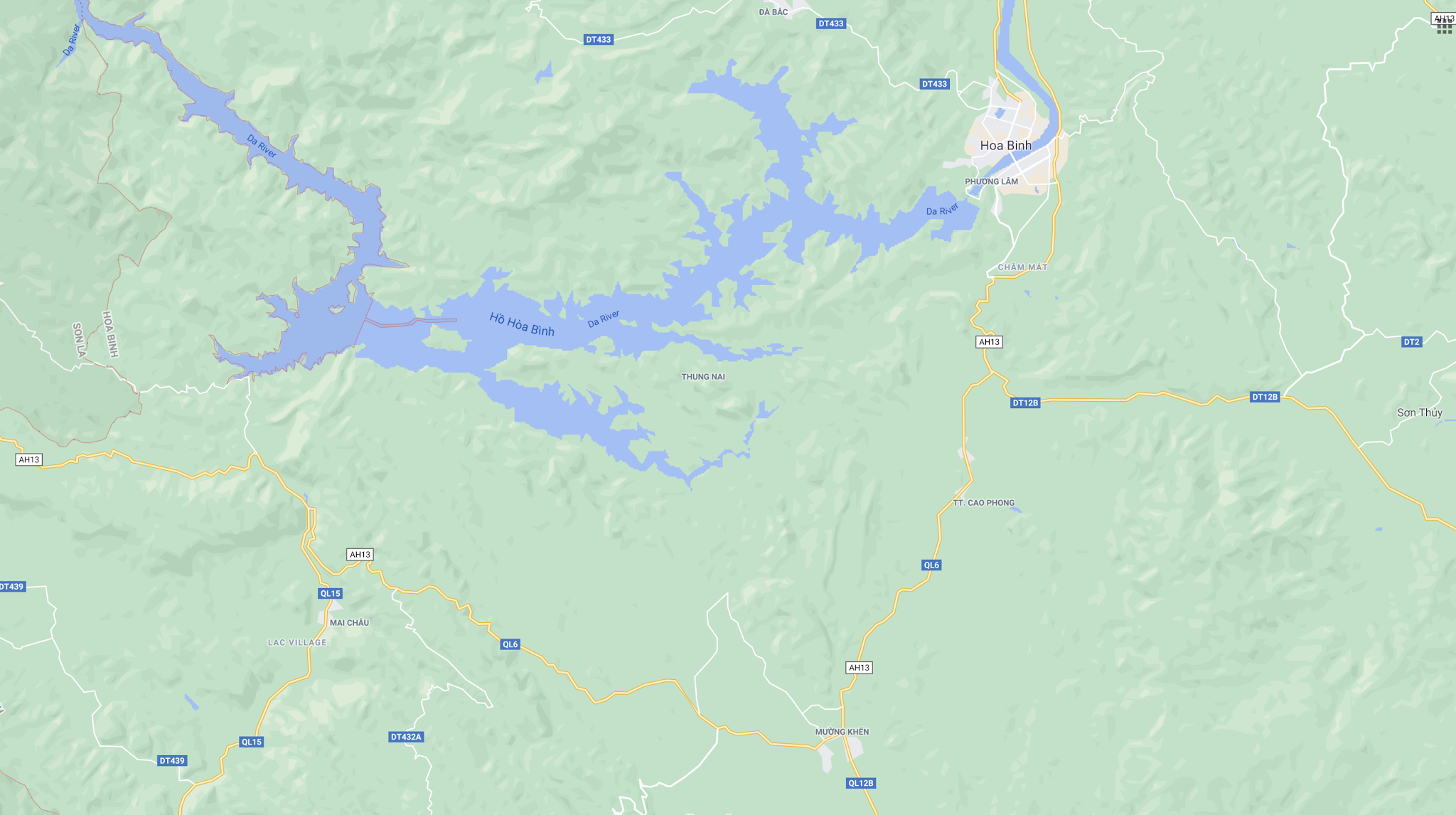
On 6th April I set out from Hanoi with Dr. Nina Yiu and a team from the Vietnamese Women's Museum on trip to visit Lac Village near Hoa Binh, South East of Hanoi.
After a three and a half hour drive we arrived in the beautiful village, finding it beautiful and quiet. The village sits in a valley with tree-clad hills surrounding it and which is carpeted in lush green rice fields. Normally this location would be buzzing with activity, local community members working and international tourists on adventure holidays. Unfortunately, due to the effects of the COVID pandemic there are no international tourists and only handful of domestic tourists from other parts of Vietnam. Normally the local community members would be making clothes, bags, and other attractive products with designs based upon traditional patterns and designs. Other community members would take the tourists on trekking trips through the rice fields and into the local hills. The tourists would stay in stilt houses constructed to follow the traditional construction methods. It was tragic to see it so quiet and devoid of visitors.
Nina and the team from the Vietnamese Women's Museum were collaborating on a project that aims to provide some support for the local communities in this area. The idea is that Nina's students at RMIT University in Ho Chi Minh City would work on designs for clothes and bags that are then made by the local community craftspeople and sold to tourists from the Museum, with proceeds going to support the local community in the future.
Of course, the students do not aim to simply reproduce traditional styles and decorative patterns, they wished to add a twist, to transform the designs and patterns in such a way as to reinvest those designs with a contemporary spirit. Some of the designs were more complicated than those that would be usually made in the village and so Nina came to assist them in gaining an understanding of the contemporary designs and also to provide technical advice, visualizing paper patterns etc.
Nina was on official business from RMIT but I financed myself to join the trip to Hanoi / Hoa Binh / Lac Village to see this lovely place.
Although the day turned out to be very busy with non-stop meetings for the whole day, I did find time to take a short walk through the village and as I did so I decided to collect ambient colours along the way.
The location of the village and the colours I collected, along with a few photos I took can be found below.
Before dusk we all set off on the three and a half hours drive back to Hanoi.
Last month I posted information about the Cheung Chau Wave Arts Festival centered around the small island of Cheung Chau in Hong Kong. At the time I didn't completely understand how the festival was operating, despite being one of the participants. This is an intriguing position to be in and made the whole situation quite interesting.
Festival Poster (Credit: https://www.facebook.com/CheungChauWave)
Recently, I picked up on festival lists that explained more about the festival. The Cheung Chau Wave festival, titled 渡 (Portal) is now presented more fully on the festival website, here and is listed as running from Dec 2020 - Feb 2021.
Festival website listing
Once inside, information can be sought either by genre or by artist name. My recorded performance of 'No holiday' took place on Cheung Chau during the period I called the island my home (2012-2018). The performance was originally conceived for the 'Duration and Dialogue Performance Arts Festival' in Toronto, Canada in 2017 and subsequently gave rise to the ongoing, serial performance it now is. Since then the performance has been recorded and live-streamed from the UK, Venice - Italy and Saigon - Vietnam. <ore performances were planned but these have been postponed due to the COVID-19 situation. As soon as the situation improves it is hoped to resume the saga.
渡 (Portal), the 2020 edition of the annual Cheung Chau Wave Festival, formed part of the planned Inter-island Festival in Hong Kong comprising exhibitions and events based on the island of Cheung Chau, created by artists residing on Cheung Chau or by those with strong connections to the island.
Unfortunately, as in many parts of the world, the planned events and activities had to be drastically reduced due to the devastating effects of the Covid-19 pandemic.
I lived on Cheung Chau from October 2012 until May 2018, after which I left and relocated to Vietnam. My time on the island became a kind of exile, though a thoroughly peaceful and enjoyable one. Every morning I would leave on the ferry for work, while it was still dark, and return in the evening after dusk. Consequently, over the years I didn't form many friendships with other island residents. This was a great pity and was caused by my hermetic lifestyle.
Not long before I finally left the island I was out on a quick shopping trip among the back-streets of the island and I came upon an interesting gathering close to the old fishermen's school. To my surprise it was part of an arts festival organized by artists resident on the island. I was shocked to learn that these and previous events had been organized by a group of like-minded creative residents and I had absolutely no knowledge of the events or the people organizing them.
I had sometimes thought that a festival on the island would be an amazing opportunity, making the most of the island's unique setting and environment, and it was frustrating to have missed a chance to connect with and participate in this festival while living on the island.
Later, now living in Vietnam, I saw an online notice about the 2020 edition of the festival and immediately wanted to participate. I submitted a recording of my serial performance 'No holiday' as it was filmed on the island in 2017. That year had been a productive one for me, creating several versions of the performance and live-streaming it to performance art festivals in Canada and the USA.
'No holiday', Cheung Chau, 2017
Cheung Chau Wave Instagram post
Although many events had to be postponed this year, as far as I am aware, my 'No holiday' performance was screened, along with other work, on the Cheung Chau ferry over the weekend of 4th-6th December 2020.
It gave me deep personal satisfaction to be able to participate in the festival and awakened fond memories of my sojourn on the little island, a time I will never forget.
Cheung Chau Ferry, activity listing
This and other 'No holiday' performances can be viewed here on my YouTube Channel, and are introduced here on my website.
This year the festival spanned three cities: Hanoi, Hue and Ho Chi Minh City during two weeks of events.
A5 Exhibition Leaflet
At L’Usine a collection of artworks and fashion exhibits were presented along with ‘information hangers’ and edited videos that attempted to explain the process behind the finished artefacts. The exhibition project served three functions: a) To investigate the intersection of art and design, b) To investigate a selection of industry resources and traditional hand-craftsmanship available within Vietnam, and c) To present this information in a format that could serve as a case study for students at RMIT Vietnam.
This sharing of information and experience with our students was high on the list of priorities as the various elements in the exhibition were drawn together. It was even possible to propose the exhibition opening reception as a subject for photography students to target in support of their ‘event photography’ work. The MC for the event was also an RMIT Vietnam business student who was undergoing training as an MC.
Installation shot (Photo Credit: Khao Nguyen)
Installation Shot (Photo Credit: Dave Lapthorne)
One week seems so short after so much work and preparation and it was over all too quickly. The opening reception saw many more attendees than had been anticipated and the exhibition was picked up on more than 25 different news sources, arts and culture online zines and websites. Local TV station ‘HTV’ also came to conduct interviews and record footage of the exhibition.
For the second year running I submitted a proposal to participate in the 4th World Congress of Psychogeography, which is usually held at a number of venues in West Yorkshire centered around Huddersfield University.
This year, due to the situation resulting from the COVID-19 epidemic, a version of the congress was organized in which the majority of events would be conducted and participated in online. A map of a virtual town centre was created with each location linking to the various content.
My accepted proposal was to broadcast a recording of my performance ‘One Step Forward, Two Steps Back’ which had been recorded on the Hickson Steps, Sydney, Australia. My work was found by clicking on the town University icon and the details were listed towards the bottom of the page along with a note to say that the performance was accessible at any time during the conference.
Unfortunately, however, my contribution was not listed on the main congress programme which made me worry that this would greatly limit the number of visitors to my linked performance. In fact the viewings recorded in the analytics of my Youtube Channel were disappointingly low.
I later responded to a call to participate in a post-conference interview via Zoom and spent around 30 minutes discussing the conference and the story behind my own work.
As many of the conference events were online this year, I was fortunate to be able to see much more of the content than I had last year. The range of events and activities, from recorded performances, films, live-stream discussions was impressive and especially so given the difficulty of arranging the conference under the current circumstances. The organisers did a magnificent job.
As I shared during the interview, it is my wish that in the future I will be able to make the journey across from Asia in future years to attend the conference in person.
As is stated on the Deveron Projects website (https://www.deveron-projects.com/about/slow-marathon/), the Slow Marathon is "Deveron Projects' annual 42km/26 miles themed walking event, composed of a conceptually led walk, expanding upon a theme or an idea related to our curated programme, in effect taking it for a walk. It is followed by a day of talks, films, food and discussion, in relation to the chosen project. Celebrating the human pace, it is both an endurance event as well as a poetic act that brings together friendship, physical activity and the appreciation of our landscapes in their geo-political settings.
Slow Marathon began in 2012 in collaboration with Ethiopian artist Mihret Kebede who attempted to walk from her home in Addis/Ethiopia to Huntly. The Addis to Huntly and back walk, was abandoned as visa restrictions, border controls and deserts got in the way. Instead, Mihret decided to walk the total 5,850 miles distance with many people to reach the distance metaphorically".
In 2020 I decided to participate in the annual event and registered to log my walks for the duration of the project. The project has now reached completion with 319 walkers registering 40544.94 kilometres in total. I personally walked 206km, which equates to 4.9 marathons.
I walked mostly in the morning though I also went out for several evening walks, all of which I enjoyed enormously, revelling in the opportunity to walk unhindered through the local neighbourhood meeting lizards, birds, bats, dogs, cats, chickens and a duck along the way.
For anyone who combines walking within their work, whether it forms the artwork itself or as an arena in which to generate work or even as an opportunity to formulate or clarify ideas, I would recommend becoming involved in future Slow Marathon events.
Iman intends on amassing a collection of sky photographs that were taken while out walking. Considering the many walkers participating in the Slow Marathon project around the world, the cumulative assembly of sky photographs would assist in constructing a global artwork representing the same sky that we all live under regardless of where we live in the world.
In support of Iran's project I took 20 photographs of the sky during my walks and uploaded them to his project dropbox. Below are the sky photographs I took: